
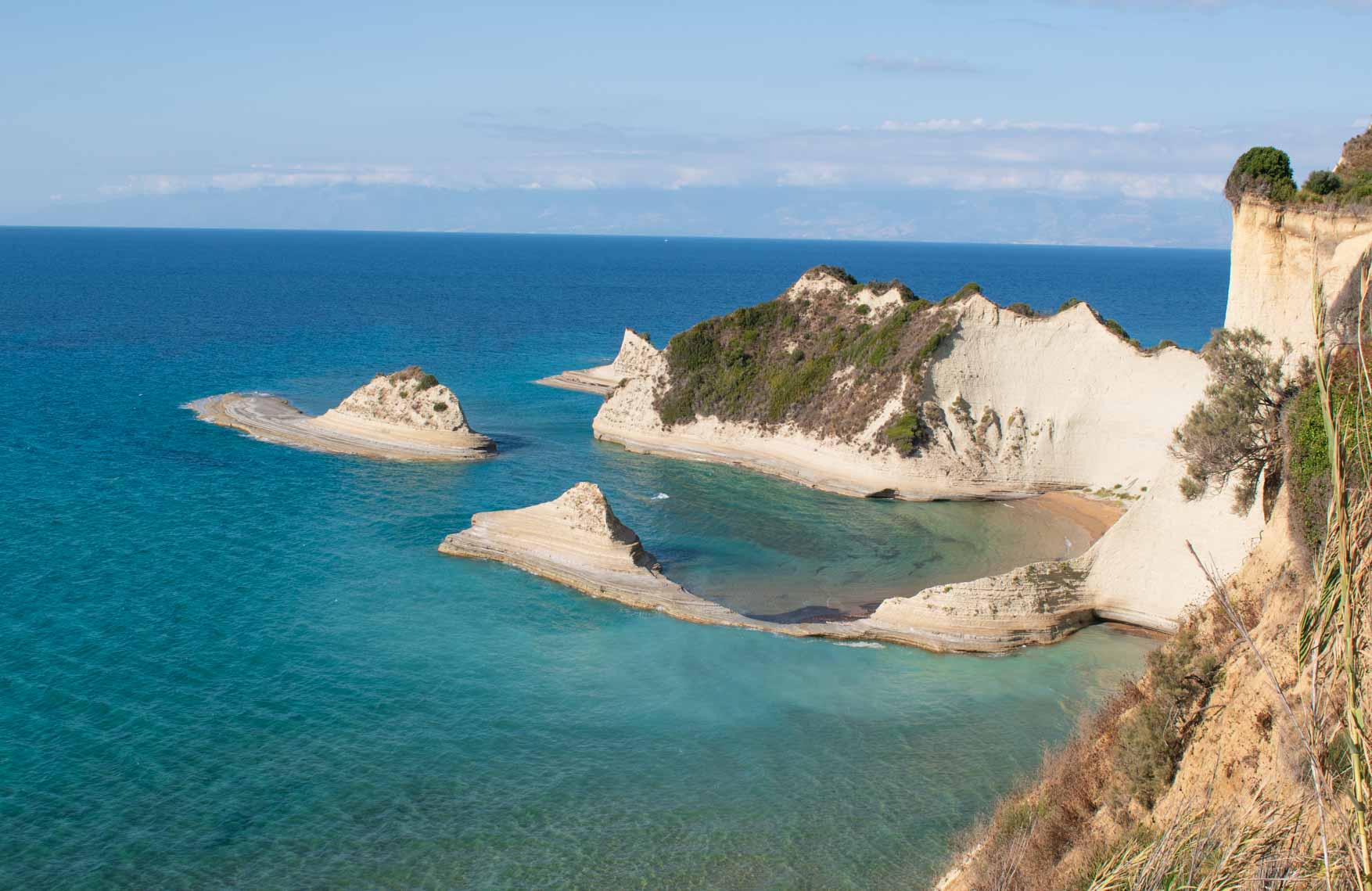
We’ve visited a lot of places over the years, but Corfu is the one we kept coming back to — until eventually we stopped leaving. We live here now, and every day reminds us why. If you’re wondering whether Corfu deserves a spot on your travel list, the short answer is: absolutely yes. Here’s our honest, first-hand Corfu travel guide from people who actually call this island home.
Where exactly is Corfu?
Corfu (or Kerkyra, as it’s known in Greek) is the second-largest of the Ionian Islands, sitting in the northwest corner of Greece just across from Albania. It’s one of the greenest islands in the Mediterranean — thanks to over four million olive trees and regular rainfall — and it has a history that spans thousands of years, shaped by the Venetians, the French, the British, and of course the Greeks.
The beaches: honestly some of the best we’ve seen
Corfu has over 90 beaches, ranging from busy sandy stretches to hidden coves that feel like they’ve been kept secret for a reason. Paleokastritsa is arguably the most famous — a series of six small bays with impossibly clear turquoise water framed by dramatic cliffs. Canal d’Amour in Sidari is magical for a swim through the famous rock formations. And if you want something quieter, the north and west coasts have plenty of spots where you’ll barely see another soul outside of July and August. We still discover new beaches after living here — that’s how many there are.
Corfu Old Town: a UNESCO gem worth getting lost in
The Old Town of Corfu is a UNESCO World Heritage Site, and it fully deserves that status. Walking through its narrow Venetian lanes — called kantounia — feels like stepping back through centuries of history. The Old Fortress overlooks the sea and dates to the Byzantine era, while the Liston, a beautiful arcaded promenade, was inspired by the Rue de Rivoli in Paris. It’s the kind of place where you can wander without a plan and stumble onto something beautiful around every corner. For a deeper dive into the island’s history and local events, Corfu Diary is a great local resource we often recommend to visitors.
The food is seriously underrated
Corfiot cuisine is unlike anything else in Greece. Centuries of Venetian influence have left their mark on the local dishes — and in the best possible way. Try sofrito (thinly sliced veal in a white wine and garlic sauce), pastitsada (a slow-cooked beef or rooster dish with pasta, spiced with cinnamon and cloves), or bourdeto (a fiery fish stew that the locals swear by). The olive oil here is exceptional — produced from Corfu’s ancient trees and used in almost everything. Skip the tourist restaurants on the main squares and head to the neighbourhood tavernas for the real thing.
Things to do beyond the beach
If you think Corfu is just a beach destination, you’re missing half the island. The Corfu Trail is a 220km hiking route that runs the entire length of the island — a paradise for walkers. Diving and snorkelling are brilliant in the clear Ionian waters. Sailing trips around the island and to the nearby Paxi and Anti-Paxi islands are unforgettable. There are also golf courses, tennis clubs, horse riding trails, and kayak hire if you want to explore the coastline from the water. And the nightlife in Kavos and Corfu Town is lively if that’s your thing.
The best time to visit Corfu
July and August are peak season — the island is buzzing, the beaches are busy, and prices are at their highest. If you want warm weather without the crowds, May, June, and September are the sweet spots. The sea is warm, the island is green, and you’ll have a much more relaxed experience. October is also beautiful — quieter, cooler, and perfect for exploring the villages and countryside. We personally love Corfu in spring when the wildflowers are out and the island feels like it belongs to the locals again.
Getting around the island
Renting a car is by far the best way to explore Corfu properly — it opens up the hidden beaches and mountain villages that most tourists never see. Scooters are a popular option for solo travellers. There’s also a bus network (KTEL) that covers the main routes from Corfu Town, and taxis are widely available. The island is compact enough that you can reach most places within an hour from the capital.
Why Corfu has a way of pulling you back
There’s something about Corfu that’s hard to explain until you’ve been here. It’s the combination of things — the smell of the olive groves, the colour of the sea, the warmth of the people, the way the light falls in the afternoon over the Old Town. We came, we fell in love with it, and eventually we moved here. We don’t think that’s particularly unusual — Corfu has a way of doing that to people.
If you’re planning a trip and want tips on specific beaches, restaurants, or hidden spots, drop your questions in the comments — we’re happy to help you make the most of your time here. 🌿